19/1/2012 ALCOHOTLICKS
WIN INAUGURAL JARA!
The Jazzgroove Association
Recording Artist Award
One of the highlights of the
2112 Jazzgroove Summer Festival was the announcement of the winner of the initial
JARA - The Jazzgroove Association Recording Artist Award. After each of the four
finalists, The Alcohotlicks, 20th Century Dog, Paul Cutlan and The Cooking Club
played for judges in the afternoon at Venue 505 the winner was announced by Katerina
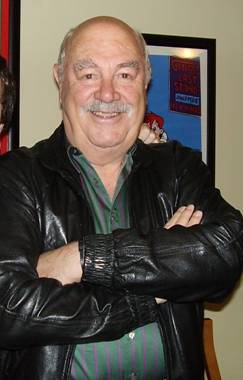
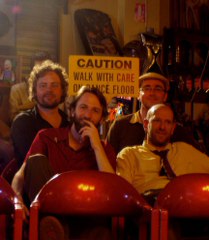
Skoumbas from Eastside Radio. The Alcohotlicks are:
Aaron Flower - Guitars
Ben Hauptmann - Guitars
Even Mannell - Drums
www.myspace.com/thealcohotlicks
The Alcohotlicks will receive
a recording and promotions package to the value of $10,000 for the creation and
presentation of new work to be released on the Jazzgroove Association’s record label
and promoted by Eastside Radio. The JARA is presented by the Jazzgroove Association
in conjunction with Eastside Radio, and is generously supported by Venue 505, Free
Energy Device and Ideas Farm.
23/11/2011 Nows the Time Moves to Thursdays
In it’s 20
th year on air, Frank Presley’s
Now’s the Time is moving to Thursday nights from 9pm on FM 99.3 Frank will continue
to host special guests from 9:30pm and feature artists performing live in Sydney
during the forthcoming week. The program will continue to present new releases
from the core of jazz to its outer most reaches and of course offer a plethora of
giveaways to subscribers of FM 99.3. It also streams live at
www.fm993.com.au
Frank Presley’s Nows the Time every Thursday at 9pm from the 1
st December
2011.
23/11/2011 Mark Isaacs on The Resurgence
Band
http://www.australianmusiccentre.com.au/article/insight-clock-time-imaginary-time-and-the-resurgence-band
23/11/2011 20th Womadelaide Announces
2012 Artists
WOMADelaide, Australia’s most diverse and exciting music festival, today announced a further
25 artists for the 2012 event. With 2012 heralding the 20th anniversary of WOMADelaide
in Australia, next year’s milestone in Adelaide’s Botanic Park from 9-12 March will
see a number of past festival favourites return, and the Australian debut of some
of the world’s most exciting new artists.
Joining the likes of the inspirational Staff
Benda Bilili from the Democratic Republic of Congo, Swedish folk duo First Aid Kit,
Mali’s desert bluesmen Tinariwen and South African icon Johnny Clegg (announced
in October) will be funk legends Chic (USA), acclaimed Australian performer Gurrumul,
Penguin Café (the new generation of the UK’s Penguin Café Orchestra), singer/dancer/percussionist/songwriter
Dobet Gnahoré from the Ivory Coast; Finland’s ‘extreme accordionist’ Kimmo Pohjonen
and DJ Krush from Japan.
Director Ian Scobie said “The 2012 festival
allows audiences to relive several of our favourite WOMADelaide artists from the
past two decades, while discovering some amazing new performers who will join us
for the very first time.”
Dance, visual arts, street theatre and food
will again play a prominent part in the WOMADelaide experience and the inclusion
of Ireland’s ponydance theatre company will have WOMADelaide audiences in a dancing
mood with their highly interactive performance, “Anybody Waitin’?” To be performed
in some of the festival bars in the evenings, ponydance delivers a witty and comical
30-minute routine in a whirlwind of movement.
In addition to performances, workshops, Artists
In Conversation, Taste the World cooking sessions by artists and guest super-chefs,
the festival will include the family favourite KidZone, with free activities all
weekend, plus over 100 food, crafts and display stalls and a parade made up of hundreds
of WOMADelaide kids and parents.
The final program, including a number of other
headline artists and full details of the site program, will be announced in early
January 2012.
The WOMADelaide 2012 line-up to date is:
· Bonobo (UK)
· Chapelier Fou (France)
· Chic (USA)
· Diego Guerrero y El Solar de Artistas
(Spain)
· DJ Krush (Japan)
· Dobet Gnahoré (Ivory Coast)
· Eddi Reader (Scotland)
· First Aid Kit (Sweden)
· Frigg (Finland/Norway)
· Groundation (Jamaica/USA)
· Johnny Clegg (South Africa)
· Kimmo Pohjonen (Finland)
· Le Trio Joubran (Palestine)
· Lo'Jo (France)
· Mahala Rai Banda (Romania)
· Master Drummers of Burundi (Burundi)
· Mo' Horizons (Germany)
· Nano Stern & The Sindicato (Chile)
· Narasirato (Solomon Islands)
· Pascals (Japan)
· Penguin Café (UK)
· ponydance theatre company “Anybody
Waitin’?” (Ireland)
· Sharon Shannon Big Band (Ireland)
· Shivkumar Sharma (India)
· Staff Benda Bilili (Democratic Republic of Congo)
· Tinariwen (Mali)
· Ukulele Orchestra of Great Britain (UK)
And from Australia –
· The Barons of Tang
· The Bearded Gypsy Band
· The Bombay Royale
· Blue King Brown
· Grace Barbé (Seychelles/Australia)
· Gurrumul
· Jay Hoad Band (Fiji/Australia)
· Jinja Safari
· JUMPS
· La Voce Della Luna (Italy/Australia)
· Melbourne Ska Orchestra
· The Pigram Brothers
· Shane Howard
23/11/2011 World Music Pioneer Honoured
World Music pioneer Kim Sanders has become the
first Australian to have a composition of Turk Klasik Muzigi (Turkish Classical
Music) published in Turkey.
“Saba Saz Semai” has been published on
www.neyzen.com ,
a website dedicated to the ney, the flute used by the Mevlevi Order of Dervishes,
known as the Whirling Dervishes. It contains an extensive archive of Turkish Classical
and Sufi music.
Sanders first visited Turkey in 1984, and has returned many times since to study and perform. Originally interested in Gypsy
and folk music, he began his studies in ney and Turkish Classical Music in 1993.
“A makam is the equivalent of a raga in Indian
Classical Music,” he says. “I have been studying Saba Makam for nearly twenty years
now, and I felt I knew it well enough to attempt a formal composition. It is a
great honour to be published by Neyzen.com.”
Kim will be performing on ney and a variety
of other instruments with Kim Sanders & Friends at the Sound Lounge in the Seymour
Centre on Friday December 9th. For details see
www.kimsandersworldmusic.com
23/11/2011 The Passing of Paul Motian
http://feeling-to-thought.com/blog/?page_id=447
23/11/2011 Phil Treloar’s RRaPP tour Wrap
Up
Correlations - One
The Reins of a Golden Chariot
Dedicated with love, affection, and thanks,
to my friend, David Tolley
RRaPP
the ReUNION Retreat and Performance Project
a spiritual experience
Conceived, Convened, and Guided by David Tolley
Invited Guest of Honor - Phil Treloar
Participating Improvising Composers
Carolyn Connors, Dur-é Dara, Tony Hicks, Anita
Hustas, Scott McConnachie,
Sam Pankhurst, Adrian Sherri., Adam Simmons,
David Tolley, Phil Treloar,
Ted Vining, Ren Walters, Julien Wilson
Documentation & Pre-Production
Audio/Visual Documentation - Brendan Tolley
Visual Documentation - Elizabeth Bell
Visual Documentation - Sian Kelly
Audio Documentation - David Tolley
Planning Assistance - Elizabeth Bell
Additional Consultation - Dur-é Dara
Support
David Jones, Tom O’Kelly &
Just Percussion,
KOROGI Instrument
Makers, Gerry Koster,
The Nudel Shop, Peter Wockner (
Jazz &
Beyond)
Technical Support
Sean Baxter & Stephen Richards (The Make
It Up Club)
Annabel Warmington (La MAMMA)
The Sound Crew at NMIT
Venues
La MAMMA
the Make It Up Club, Bar Open, Fitzroy
North Melbourne Institute of Technology
The Tolley/Dara Residential Studio Space (home
base and sponsors to the RRaPP project)
Whatever it is that enables us humans to communicate
with each other via ‘artistic’ expressive means – visual, aural, or otherwise –
remains, to me at least, a mystery. When I first embarked on my musico-creative
journey almost fifty years ago, simplistically perhaps, I thought music-making was
something one
did and that all one needed to do was acquire certain skills
appropriate to a common linguistic mode and
voilà, it would all be forthcoming.
And forthcoming it was.
But
what it was very quickly became the
source of increasing dissatisfaction. I soon discovered that the communication of
feelings, thoughts, ideas and predilections, even when apposite, was anything but
a simple matter. I quickly realized instrumental technique and the acquisition of
linguistic skills to be but a small part of a much more complex story and that discovering
a path to tread consistent with my character and honest in its representation would
be a life-long commitment.
At first my commitment and aspirations gushed
forth in a gung-ho, hell-bent mode that served to drive away attention as much,
or more, than to attract it. Though my spiritual drive was apparent very early on,
giving voice to it proved to be an exceedingly difficult and complex call. Many
more times than once was I tempted to give it all away as a lost cause, telling
myself that, in essence, I didn’t have what it takes. But even in the darkest times,
the call kept calling. It seemed that, for the most part, I was chasing myself
round in circles and that the merry-go-round was a vicious circle from which no
escape was possible. And having been from birth, somewhat of an all-or-nothingt-at-all
sort of person, resignation was no option.
In those early days there were precious few
with whom I was able to discuss the problems and confront the personal and creative
on mutually beneficial ground. In this regard, Roger Frampton and I were to spend
several years together though the exchanges between us were, in general, much more
weighted towards the music as the way. I felt there was more to it than music per
se, though precisely what that
more might be seemed beyond reach. It was
not until meeting up with David Tolley and Dur-é Dara circa 1975 that fertile ground
serving as a support to both the personal and the creative became exposed. Their
insights, generously given at that time regarding this meeting place and its positive,
generative nature provided me with a key my journey was lacking. For a brief period
I viewed them, and particularly David, in Guru-like terms. And the key? That to
consider a division between what one did and who one was, was to consider a fiction.
Residing in Sydney as I did at the time, regular trips to
Melbourne ensued, musico-creative
exchange between us flowered, and under David’s auspices, CONNECTIONS – Dur-é, Tolley,
and myself – came into being.
We gave public performances in both Sydney and
Melbourne – The Basement, The NSW State Conservatorium of Music, The Melbourne Musician’s
Club, and Philip Institute among these – and spent countless hours playing and
problem-solving together in the various spaces
David and Dur-é always maintained and devoted to these specific pursuits. From where
I stand today I realize we were like-minded spirits who gravitated towards each
other in what was, by and large, a rarefied (if not barren!) creative-music atmosphere,
our extremely diverse backgrounds and experiences serving, if anything, to attract
rather than repel. There was immense richness to fathom and fathom it we did. And
the key I’ve carried from that time to the present continues, inexorably, its exponential
trajectory.
When David, Dur-é, and I re-connected in September,
2010, it was immediately obvious to each of us that little had changed with regard
the nodes between our respective bridges: harmonic purity had been maintained across
a hiatus of twenty years. David sent me CD after CD of collaborations he presently
&/or recently enjoyed and with each one, and each listening, in it, I seemed
to hear a ‘natural’ place for myself. Idiosyncratic as most of this music is, I
heard it as neither exclusive nor dependent. Rather, it seemed to me to function
from a foundation akin to ‘interdependence’, a foundation I, too, had been building
on for many years albeit from a very different perspective; a field of confluence
withon a broader field of interdependence, finding its intersecting elements in
‘improvisation’ as a notion &/or an ideal whose potential for exploration does
not depend on common linguistic formula – i.e., construals within the boarders of
a
‘Sensus Communis’ – but rather it discovers communicable elements
en
route through open hearts and a preparedness to pool perspectives freed of the
demand of definition; a constantly malleable state whose structures and forms are
never reified.
There was neither struggle nor conflict of
intention. RRaPP emerged through an initial stream of e-exchanges that not only
sang the praise of the music already documented in David’s massive library but also
sang songs volubly; songs of potential. As RRaPP’s organization developed under
the astute eye and mind of Tols, as feedback from all who expressed unmitigated
enthusiasm for the project mounted, it became increasingly clear to me that something
of unprecedented magnitude and creative spiritual power was coming into being. The
cast of RRaPP’s creative potential appeared more as an unbounded vista. Tols had
taken the reins of a golden chariot.
With assistance and enormous support from Elizabeth
Bell and Dur-é, RRaPP took on the form of its initial intention, inimitably signified
as ReUNION Retreat and Performance Project. In the event, it not only upheld the
promise of its title but exceeded by a country mile whatever boundaries might have
been implied by it.
When I arrived at Tullamarine on October 24,
Tols and Dur-é were there to greet me. Irrepressible joy filled us to repletion.
We went directly to the rehearsal space of percussionist, David Jones, who had generously
contributed to the celebration of RRaPP with the offer of instruments to borrow
for its duration. D.J.’s open-hearted kindness seemed to open up to me, sonic potential.
On our arrival at No. 20 – RRaPP’s home-ground – there were two large boxes containing
the smaller of my two marimbas. This instrument had been shipped by KOROGI, the
instrument maker here in Japan, as his contribution to the RRaPP project and my
subsequent musical activities in Australia. This amazing generosity was made more
palpable through the kind heart of Tom O’Kelly (
Just Percussion) in Brisbane, who’d coordinated and contributed to the shipping process. Within the hour of my arrival
at No. 20 the marimba was up and playing. RRaPP had begun in no uncertain terms.
Where perhaps an extensive moment-to-moment, blow-by-blow description of RRaPP could
fail to communicate its glory, an overview may better etch its might. The incontrovertible
creative bent intrinsic to David Tolley’s character enabled a structural framework
on which RRaPP’s process of emergence unfolded. This unfolding was, in all respects,
a shared endeavor with RRaPP’s form emanating as the result of creative contributions
made by every person who actively engaged. What is this form? How might it be seen
to have manifested? Were these two questions to be put to each member of the RRaPP
Pack one would most likely find a different answer. And in some cases the difference
may even be vast. But this, in fact, provides a key to RRaPP’s extraordinary formal
shape – I’ll coin the phrase,
correlated diversity. And what might be the
mutuality found in this co-relationship?
Mutuality is not necessarily a synonym for
sameness. It might just as well infer something shared … something like ‘diversity’,
for example. If a noun was ever suitable to ride tandem with RRaPP, then ‘diversity’
is a great candidate. To my way of feeling and thinking the form RRaPP traced out
was powered by this. But set as its keystone securing the entire edifice were the
bonding elements of warm-hearted love and humility.
Far from the terrain of technical ‘stuff-strutting’
or ‘in-crowd’ secrets, RRaPP’s form took shape on the ground of open-hearted acceptance
and the pooling of creative resources and predilections. Ironically perhaps, each
member of the RRaPP Pack is able to furnish astounding technical wherewithal. This,
however, remained covert and only energized in the name of collective purpose. Never
for its own sake. The ‘stuff ’ of humanity determined both sounds made and silences
chosen. Thus, the voice of each protagonist became the voice of RRaPP itself. In
fact, so consistent was this that if the notion of ‘normality’ applies at all, then
it’s found in these terms. But normality, per se, was never an operative constituent.
None of the people involved with RRaPP could be described as ‘normal’. They have
all sought a path of their own, one that enables creative expression freed of stylistic
dictates and servitude yet emblematic of what it is to engage with creativity in
the moment; of honest self-expression; of recognition and acceptance; of intelligent,
warm-hearted being and a generosity of spirit overwhelming in its magnitude.
Those who participated as audience members
brought to bear a focus on the music that placed them inside the sound and thus,
active in the process. Sharing in creative space with the RRaPP Pack was, and remains
for me, an immeasurable honor. My deepest, heart-felt thanks to you all. And to
Tols, Dur-é and Elizabeth, endless gratitude for opening the door to your heads,
hearts, and hands.
Correlations - One:
The Reins of a Golden
Chariot Phil TRELOAR, November, 2011
07/10/2011 From High School Truant to an
OAM for Jazz
ALTHOUGH she's appeared
on more than thirty albums, any new CD from Sydney composer and saxophonist Sandy
Evans is enthusiastically anticipated. ‘When The Sky Cries Rainbows’, her latest
recording, is especially noteworthy, not only because of its high quality musicianship
and compositions, but for being the first time she has spoken publicly about the
tragedy that struck her husband, saxophonist Tony Gorman.
In the album cover
notes, Evans describes Gorman waking up one morning in 1996 numb from the waist
down, and after agonising delays being diagnosed with multiple sclerosis. ``Years
went by in a haze of fear and depression,'' Evans writes.
It was more than
a personal disaster. The pair had formed a close musical bond, playing together
in various groups, notably in their highly-regarded quintet Clarion Fracture Zone.
Now Gorman was forced to relinquish his career as a professional musician. Evans
says: ``Clarion Fracture Zone is presently latent.''
The rainbow of the
album's title is a symbol for her of finding hope through suffering. ‘Rainbows’,
a thirteen part suite, featuring Evans's long-term trio expanded to a sextet, is
dedicated to Gorman, and will be performed by the same group at the Wangaratta Jazz
festival in October. Evans is also looking forward to performing there in a duo
with pianist Paul Grabowsky.
There is an unpredictability about MS – sufferers may be almost normal one day but
incapacitated, perhaps immobilized and in pain, the next – and on good days Gorman
enjoys playing an alto clarinet at home, sometimes with an improvising quartet.
Although doctors are unable to supply a prognosis, for the present Gorman is relatively
stable.
Evans's musicality
began early. As a pre-schooler she could read music before she could read words,
thanks to her mother, a piano teacher. ``Mind you,'' she says, ``my piano playing
hasn't improved at all since then.''
Now aged 51, she
is an outgoing woman of diminutive build; someone once commented that she wasn't
much taller than a baritone sax. She played recorder and flute at age eleven, and
during her high school years was introduced to jazz by John Speight, the late artistic
director of the Manly Jazz Festival. After joining Speight's big band she decided:
``The flute wasn't going to cut it so well.'' She took up alto sax, moved to soprano
then ultimately to tenor because, she says: ``I've got a high-pitched voice so I
think I have an urge to play lower things. The tenor has such a warmth in that lower
register.''
Moving to Singapore for her final secondary years at an international boarding school provided an opportunity
for Evans's first professional gigs. She began sneaking out of the school at night,
climbing a barbed-wire fence and avoiding dog patrols, to join a guitarist for hotel
gigs. ``I was lucky I didn't break my leg,'' she says.
Returning to Australia in 1979 she thought of becoming a film-maker, and with teenage impetuosity driving a social
conscience went to India to join its enormous film industry. ``It turned out to
be a bit of a disaster,'' she says.
Returning to Australia she took saxophone lessons with Tony Buchanan, as well as studying composition and
improvisation with the highly individualistic composer Bruce Cale. These studies
led to Evans taking a jazz course at the Sydney Conservatorium where she learned
from legendary pianists, Paul McNamara and the late Roger Frampton, plus sax teachers
Bob Bertles and Col Loughnan.
Evans formed her
first band, called Women and Children First. Buying a minibus in 1985, the five
band members and a manager set out on a seven-month journey around Australia, playing as they went and camping out. They often performed outdoors, featuring the
musicians emerging from the bushes as they played their opening piece: ``We were
a bunch of hippies,'' she says.
After meeting Gorman,
a Scot, at a jazz festival in Germany in 1986, the couple was married in Glasgow and came to Australia in 1988 to form Clarion Fracture Zone the same year. Their debut
album ‘Blue Shift’ won an Aria Award in 1990, and their second CD, “Zones on Parade”
brought a coveted five star review in Downbeat magazine plus invitations to perform
at festivals worldwide. In 1991 Evans was a founding member of The catholics, a
septet where she still plays the group's own brand of infectious dance rhythms.
She's also an original member of The Australian Art Orchestra and the acclaimed
Ten Part Invention, plus leading or playing in several other groups, including her
own renowned trio, the exploratory GEST8 featuring the Japanese koto, world music
exponents Waratah, and a modern jazz/world folk music combo Mara! Probably best
known for her contemporary jazz performances on tenor sax, Evans plays with a rich,
warm tone and world-class ability. She's capable of strong grooves when required,
and equally adept at deeply expressive interpretations of slower pieces, all delivered
with faultless execution.
Throughout this
difficult time, Evans kept playing, teaching and composing, completing an ABC commissioned
work called ‘Testimony’, a tribute to saxophonist Charlie `Bird' Parker. A recording
of the complete work is to be issued in the US in 2012.
To cope with the
stress of living with MS Evans has found ways that assist. She relaxes with “Hot
Yoga,'” a system to reduce tensions, evolving from traditional yoga techniques and
practiced by various professionals including athletes and some actors wanting to
overcome stage fright. Evans spends ninety minutes per session in various yoga positions
in a 37 degree heated room in high humidity; she and Gorman regularly go bike riding,
which he finds easier than walking, raising funds from rides for the MS Society.
Six years ago she took up Buddhism and says that too has helped.
Evans has won numerous
awards over the last forty years, but probably the most prestigious of these came
in June 2010 when she was awarded a Medal of The Order of Australia (OAM) for services
to Australian contemporary jazz as a composer and a musician.
By John McBeath
Previously published
in The Australian October 2011