Archived · Jazz and Beyond · Jazz · 5 min read
Peter Wockner with Vibraphonist and Composer Gary Burton 28th May 2014
Peter Wockner with Vibraphonist and Composer Gary Burton 28th May 2014 Peter Wockner: Collaboration is such a common word to describe jazz projects but…
This date is the archive capture date; the original publication date was unavailable.
Historical article recovered from a Wayback capture dated 2018-02-24.
Peter Wockner:
Collaboration is such a common word to describe jazz projects but your musical relationship is much more. Stemming from a 1972 Berlin concert, you and Chick come close to reading each others minds. Can you describe how surprising that must have been to discover such musical kinship?
Gary Burton:
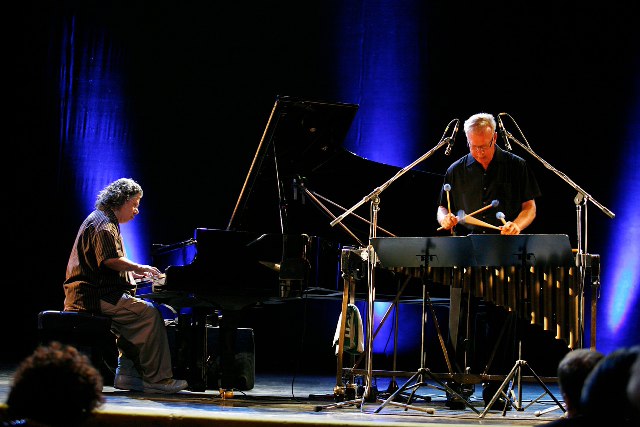
It was a surprise to us when we first set out to record our album, CRYSTAL SILENCE, in 1972. We thought it would take 2-3 days, since we hadn’t yet rehearsed and prepared material, and would essentially be starting from scratch. But, we finished the whole thing in about three hours. Every tune was a first take except for one song, Senor Mouse, which took two takes. We realized then that we had an incredible rapport, and it only got better once we starting performing live on a regular basis (42 years now).
PW:
Notwithstanding the obvious rapport, it takes someone of great taste to recognise it and package it to an audience. Can you describe the role Manfred Eicher of ECM has had in the success of your duo with Chick Corea?
GB:
Manfred talked us into making the first record. We thought it was too esoteric – I mean, who would want to listen to a whole hour of just piano and vibes? But he was persistent, and some months later, we were in the studio. Even then, we thought the record would barely get noticed. Another surprise, it was a big success. Manfred was key to the individual success of both Chick and myself during the 70s, and he certainly pointed us in the right direction as a duet.
PW:
What approach do you take to repertoire that might be unique when dealing with a duo performance?
GB:
We are always looking for pieces that seem to be well suited for our duet. That means pieces that can be fully played with just our two instruments, and that also challenge us as players. We have a lot of originals by Chick, plus more standard pieces by musicians such as Thelonious Monk, Duke Ellington, Dave Brubeck, Antonio Carlos Jobim, etc
PW:
In a way you’ve set the standard for the jazz duo. Do you have a particular album that you believe resonates as the definitive Corea Burton recording?
GB:
Most of our fans would probably select the first, CRYSTAL SILENCE, as the most important, and I can easily agree with that. I also favour our live ZURICH CONCERT recording from 1981, and our latest, HOT HOUSE. Frankly, I think all of our collaborations are among my most important records out of the 65 or so that I have made in my career.
PW:
Of course you’re a prolific recording artist and Grammy Award winner in your own right having had a stellar career from the time you won Downbeat’s Jazzman of the Year in 1968. How has your approach to your own music changed over the years? What were your priorities in the early years compared to now?
GB:
My priorities in the early years were mainly to stand out from the crowd, to have something original and unique to offer, and that led me to several things. I was encouraged to expand the technical possibilities of the vibraphone, including playing with four mallets, developing certain dampening techniques, and also using the vibraphone in different settings than were usual up to that time (playing tango music, classical music, country music, solo performances, duet performances, etc.). Over the years, I have kind of settled into a stylistic niche of my own, based on a broad range of types of music, but geared toward lyrical and expressive music. I also search far and wide for compositions that meet the highest standards.
PW:
You’re also a dedicated teach mainly at Berklee College of Music. Communication is a common denominator both in performance and in successful teaching. Obviously both are very dear to your heart but can you nominate what moves you most, is it performing, recording a great album, composing or teaching?
GB:
Obviously, if I had to choose only playing or only teaching, I would choose playing. But, teaching is very rewarding, and I have been teaching in various settings since 1971, the year I started at Berklee. I retired from Berklee in 2003, but continue teaching an online course in improvisation for Berklee to this day, which I enjoy immensely. It is correct to say that both teaching and performing require high communication skills. The challenge is that, playing skills are not the same as verbal skills. Some musicians can play wonderfully, but have no gift for explaining it. Others are good at teaching, but so-so at playing. I have been fortunate to be a successful player, and to have a natural talent for discussing and explaining and demonstrating what takes place in the act of performing. Seeing that this is something not every musician has a knack for, I have always had a sense of commitment to continue teaching to the extent that my schedule allows.